
Register now to gain access to all of our features. Once registered and logged in, you will be able to contribute to this site by submitting your own content or replying to existing content. You'll be able to customize your profile, receive reputation points as a reward for submitting content, while also communicating with other members via your own private inbox, plus much more! This message will be removed once you have signed in.


Admin
Administrators-
Content count
5054 -
Joined
-
Last visited
Posts posted by Admin
-
-
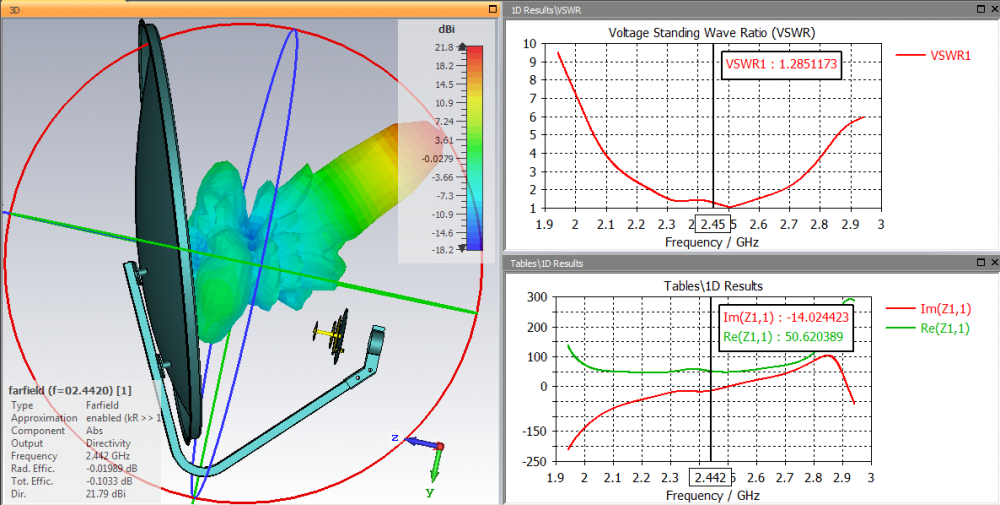
,,,for offset antenna...
 4 people like this
 -
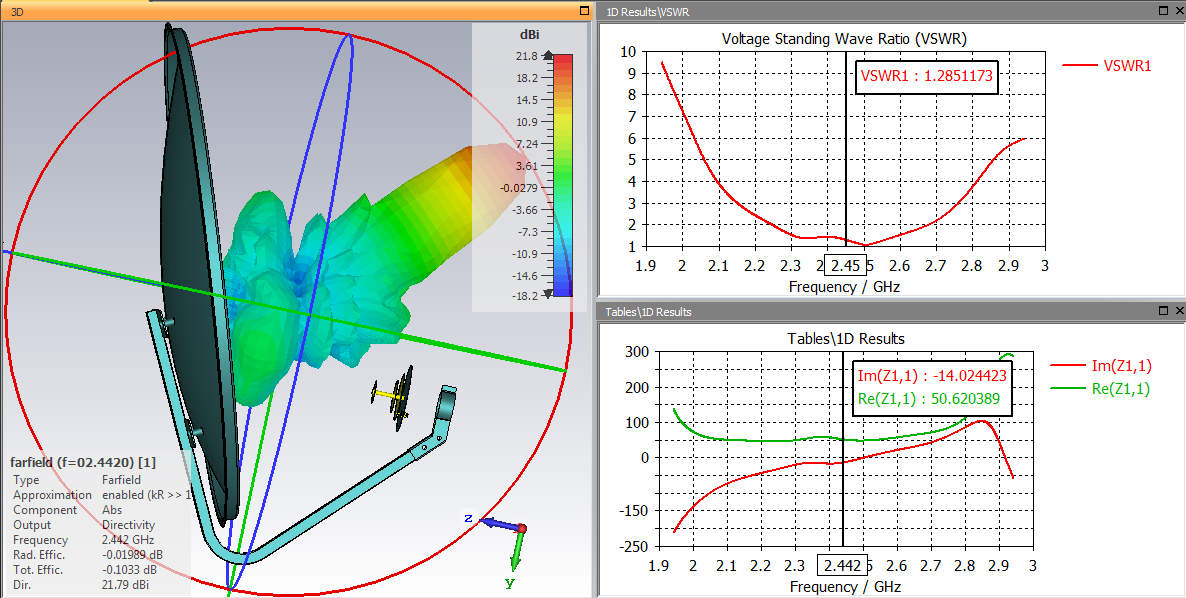
,,,you have two options...with the center phase where the focus of the offset parabola is placed..!!!
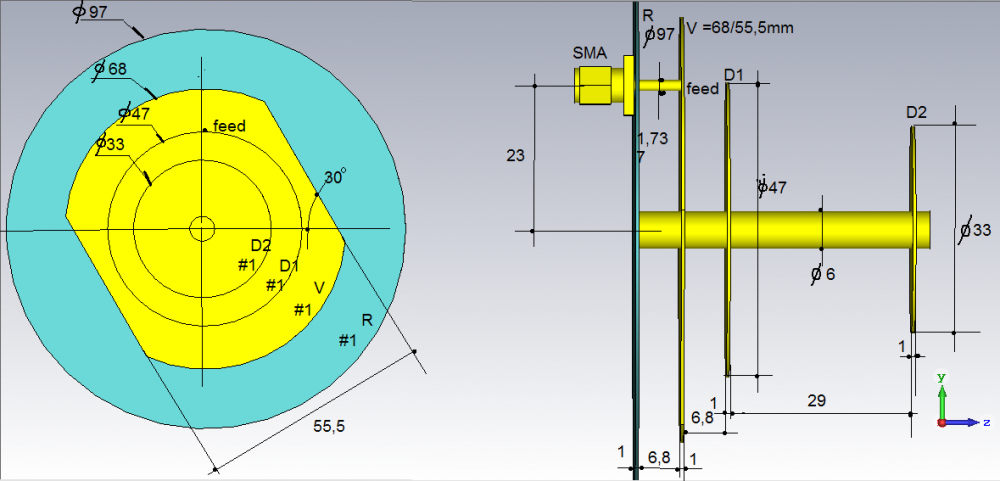 1 person likes this
 -
For now, I think it will stay the way it is...!!!
-
Marcello, it doesn't make sense to work in two positions..."Wifi extender antenna for long distance (10 km)"+"4G Repetear/Amplifier"...!!!
I'm going to delete one of them, so decide which one to stick with...!!!
-
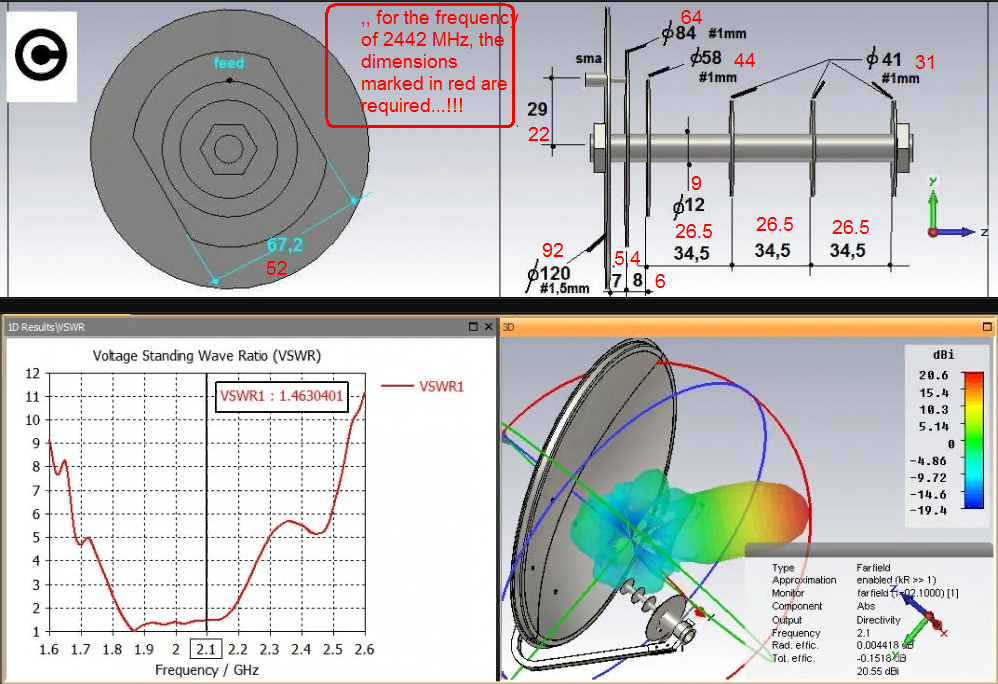
,,, could be a solution but better wait until I do the simulation for the desired frequency...!!!
2 people like this -
,,, but what frequency do you want to work on ...?
-
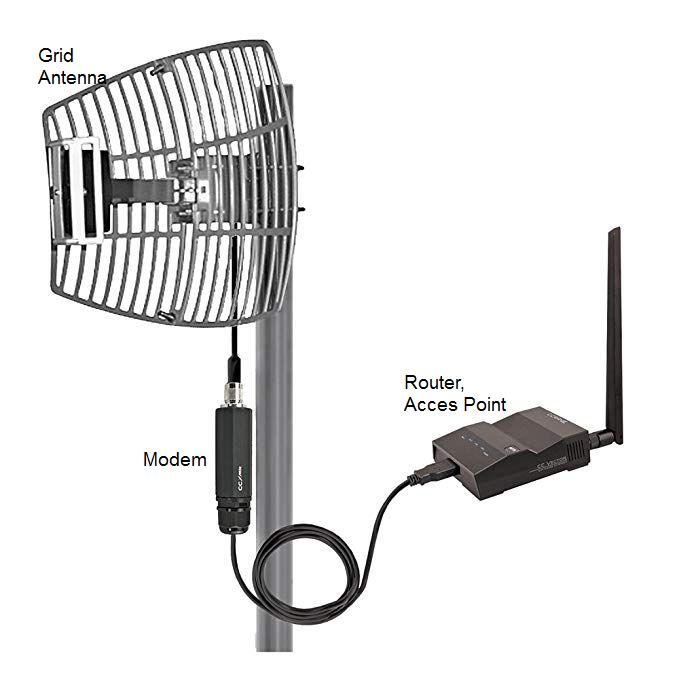
I think this solution would be good...https://yandex.ru/video/preview/?text=Wifi extender antenna for long distance (10 km)&path=wizard&parent-reqid=1640579748980487-3609367412323145088-man1-6175-man-l7-balancer-8080-BAL-633&wiz_type=vital&filmId=9712634466127784192
,,,or something like this...
-
,,, to put in the focus of a parabolic offset...Pacman Epicyclod
 1 person likes this
 -
-
It looks like this antenna is pretty good...
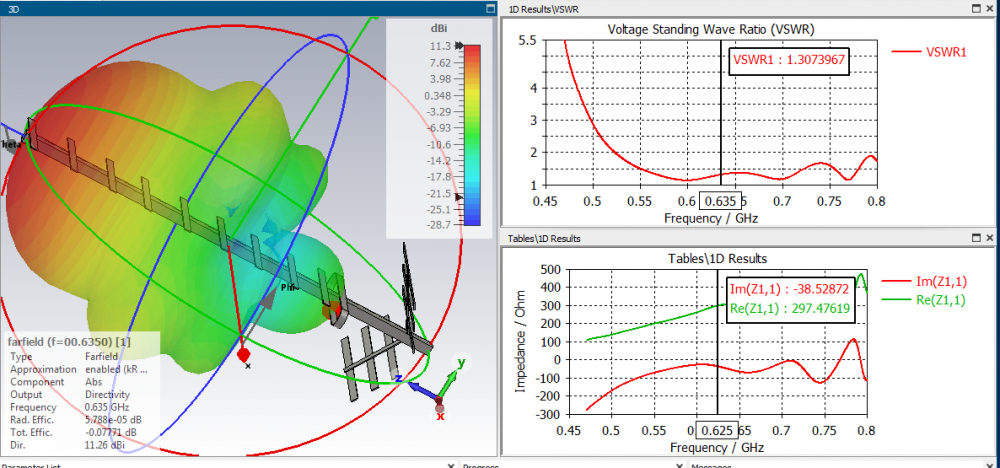 1 person likes this
 -
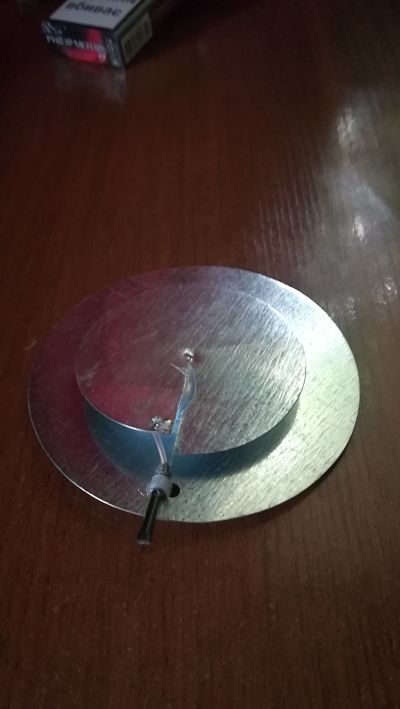
It was interesting to design a small and lightweight antenna from available materials for FPV.
After looking at what is available in household stores, I decided to stop at zinc/brass for the antenna elements and a canister cover as a radom.
And so everything is in order - as it seemed to me, a lid from paint cans / mounting foam / air fresheners is perfect for radom. Its diameter is 77 mm external and 84 mm internal. Height from 12 to 40 mm. Material-polypropylene.
Based on this, the dimensions of the entire structure were selected.
you will need brass / galvanized 0.25 mm thick, brass tube diameter 4 mm external (wall thickness 0.25 mm), screw m3 -40 mm. cap nut m3, SMA connector, pipe cutter, metal scissors, drills with a diameter of 1.4 and 3 mm.
The reflector is made of sardine cans.
General view of the structure and results: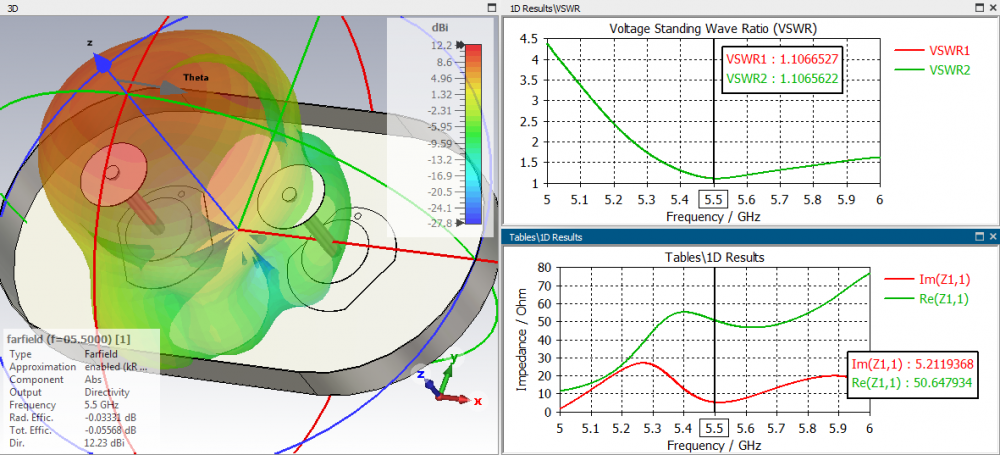 3 people like this
 -
Vova, do you have any dimensions to this ... ???
-
-
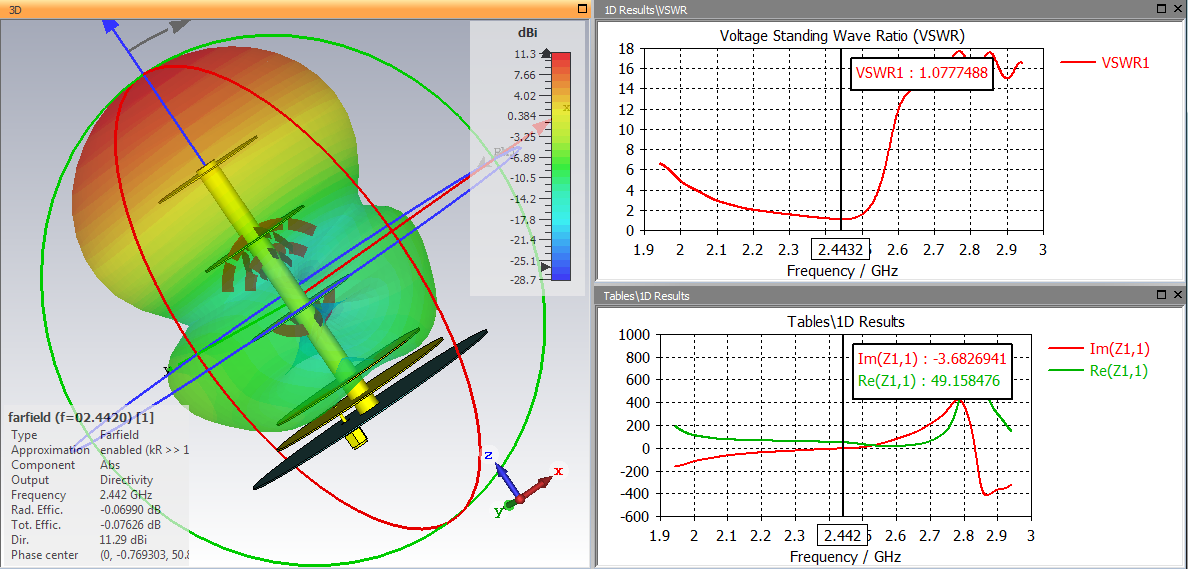
,,,the distance between the vibrator and the reflector as well as the other dimensions must be reviewed...!!!
-
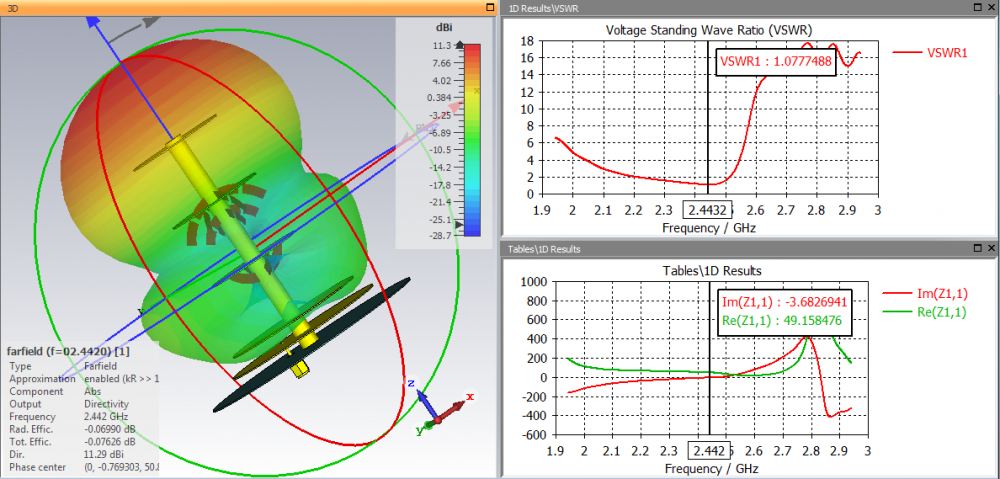
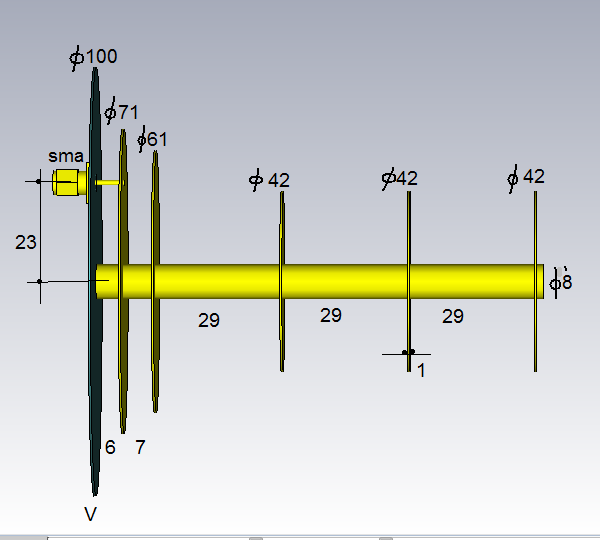
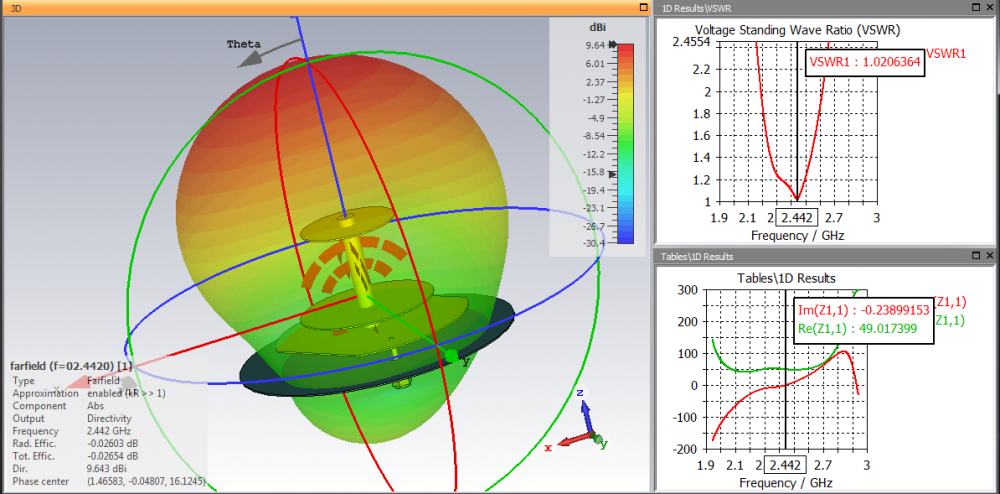
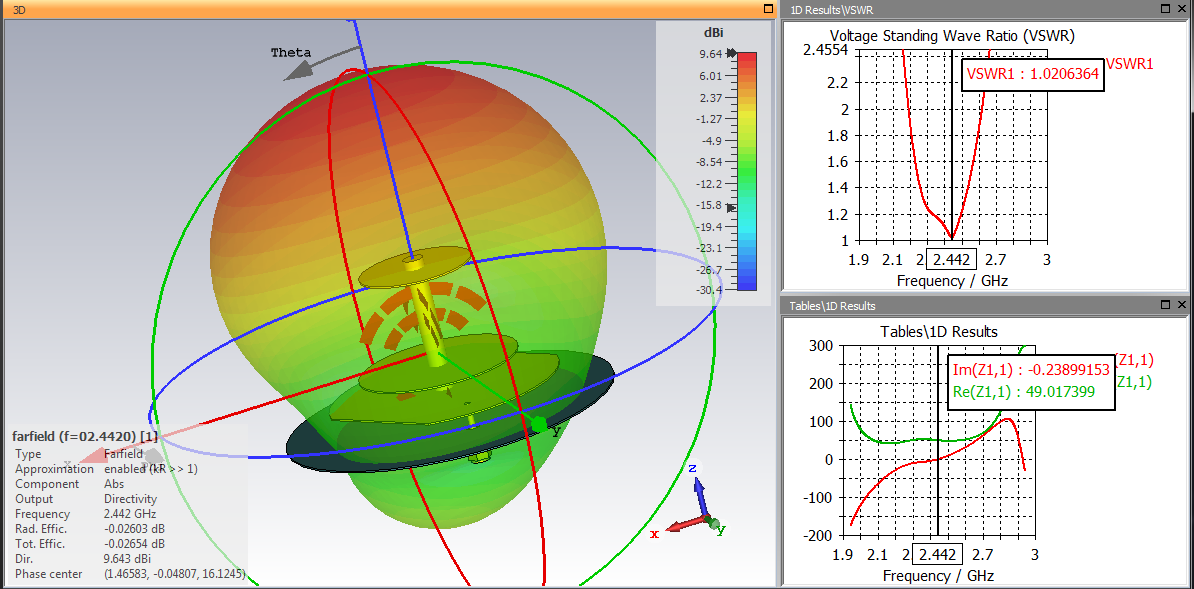
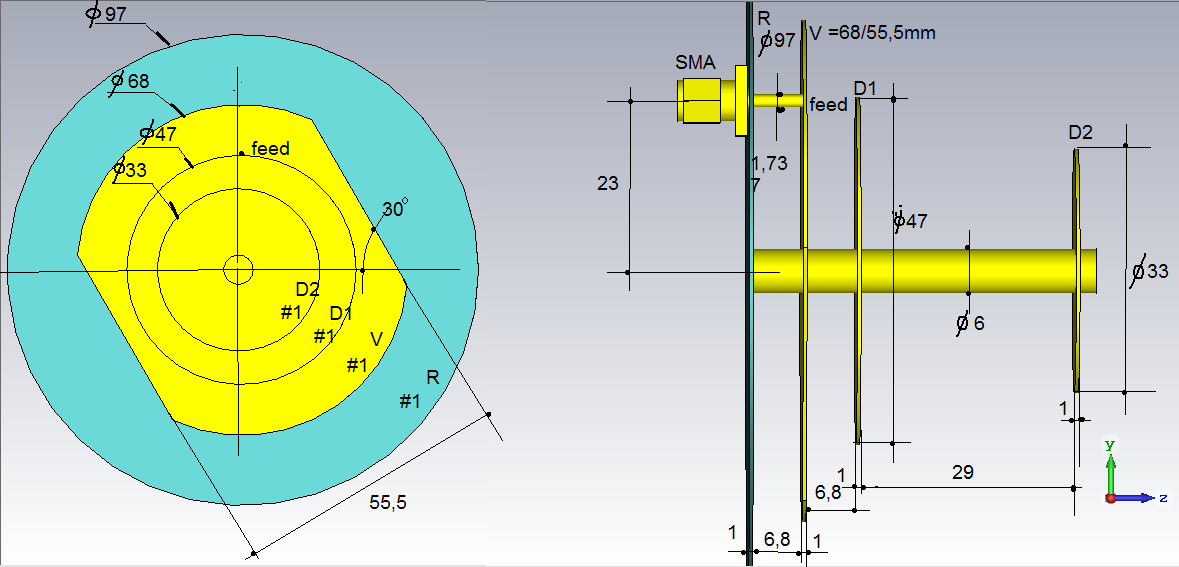
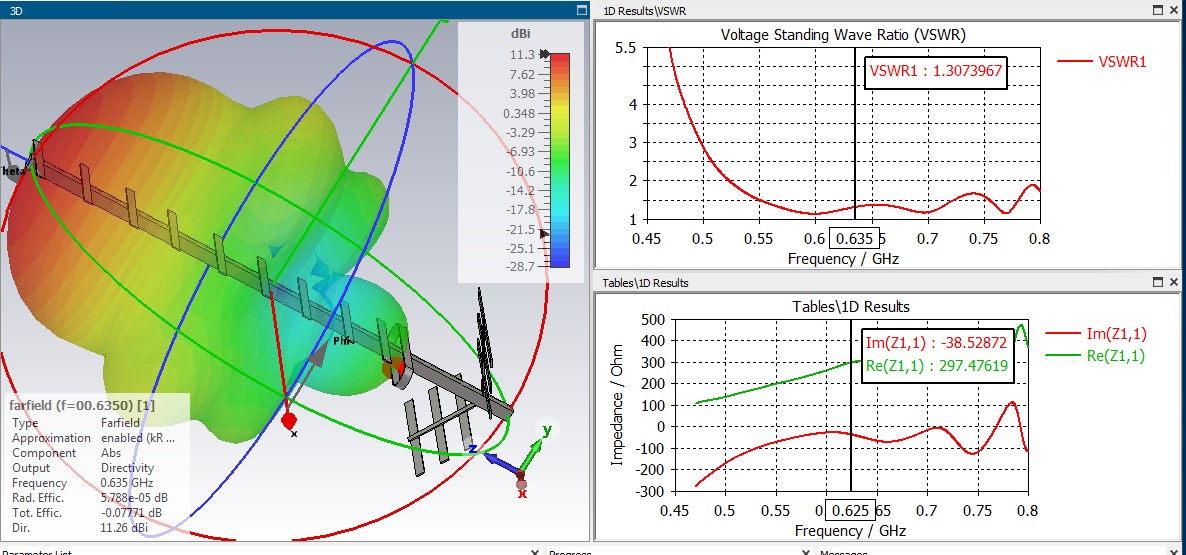
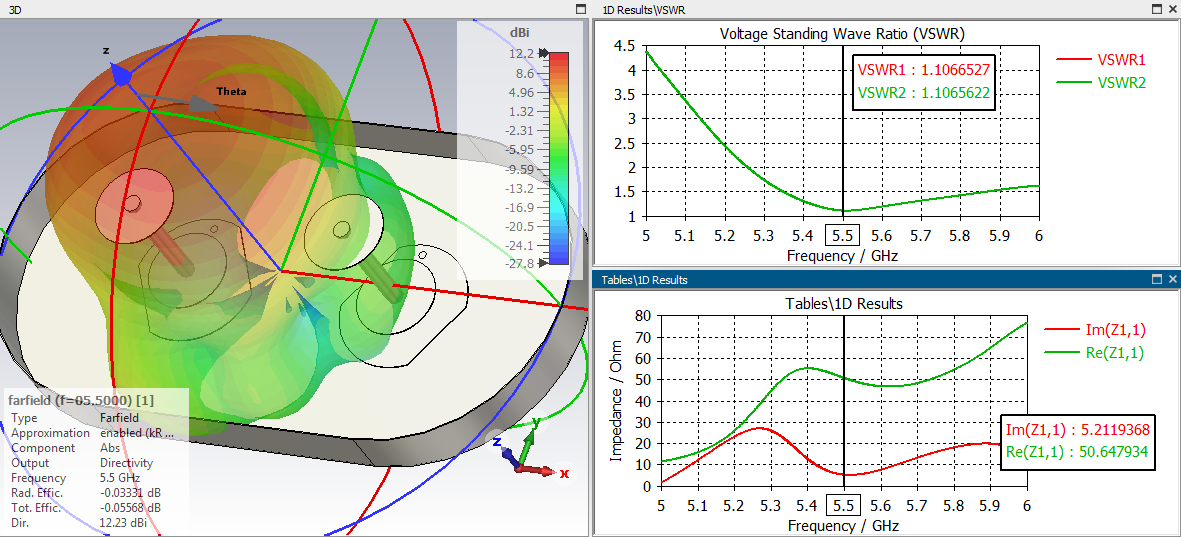
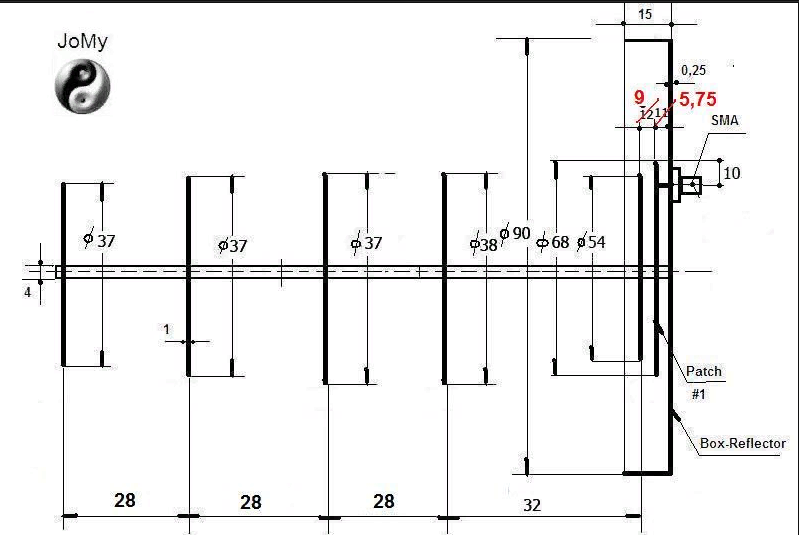
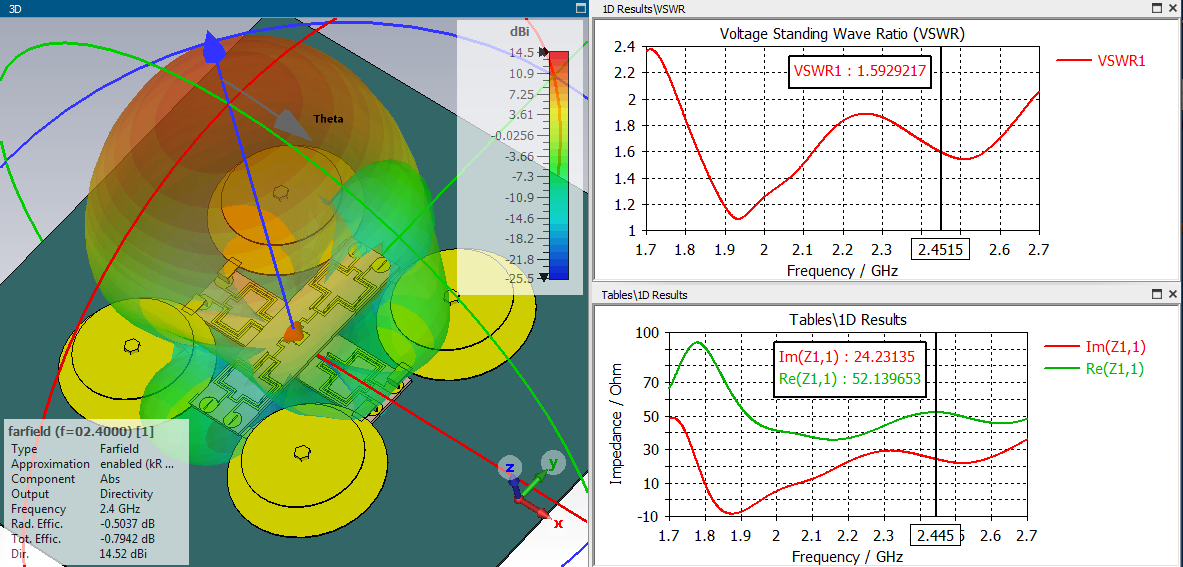
,,, a simulation with the above dimensions (given by me)...
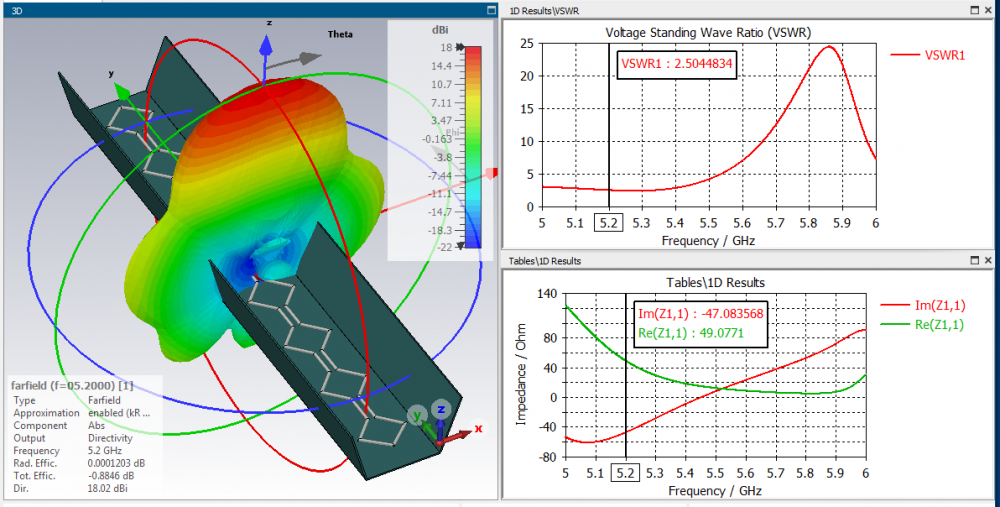 2 people like this
 -
,,,if Guanella adaptation is correct, it can be even better...
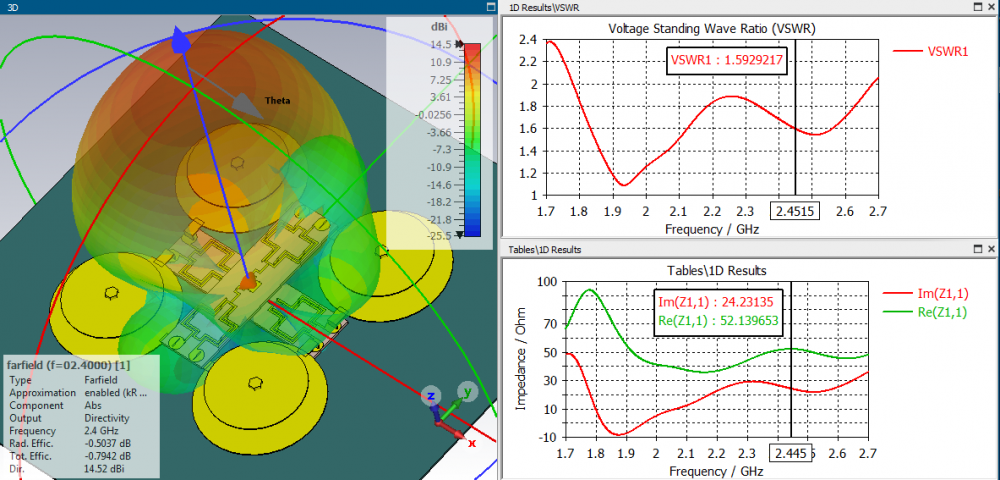
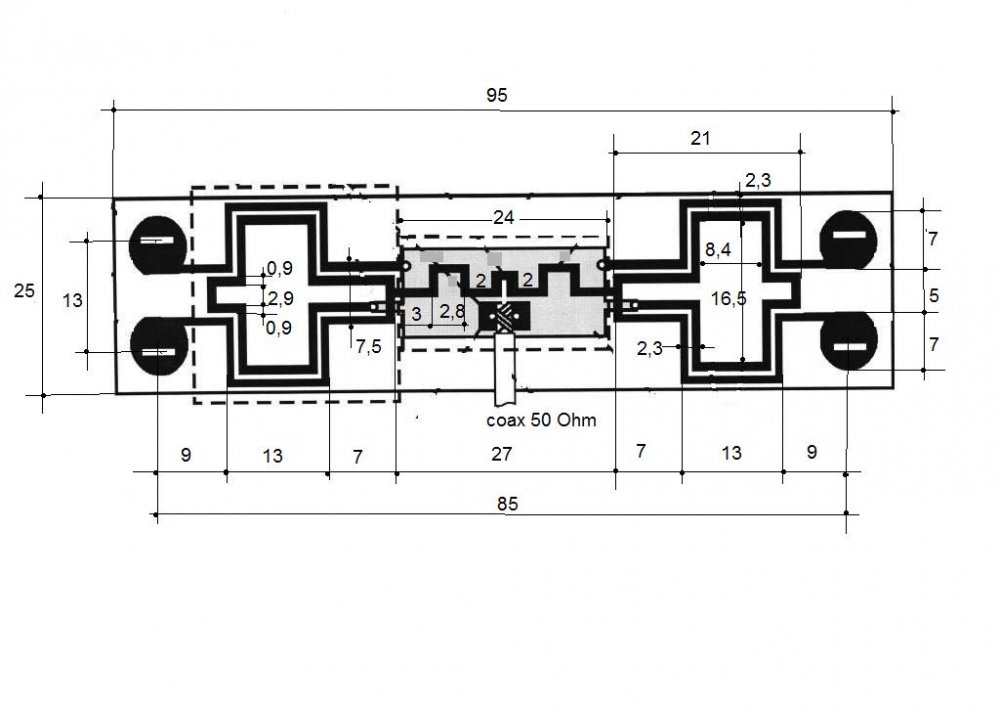
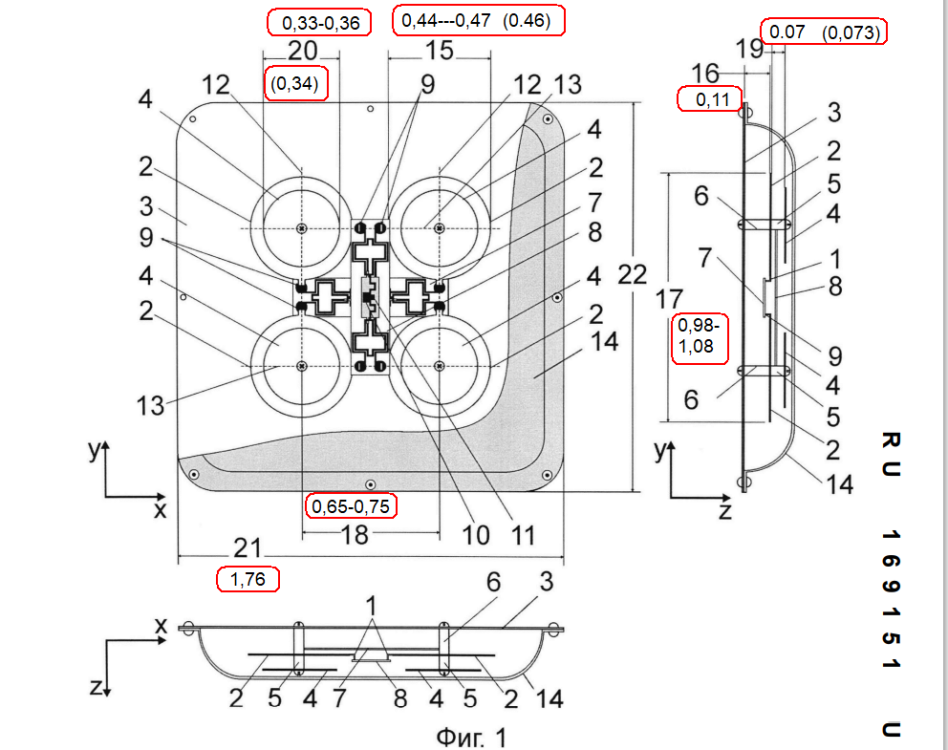
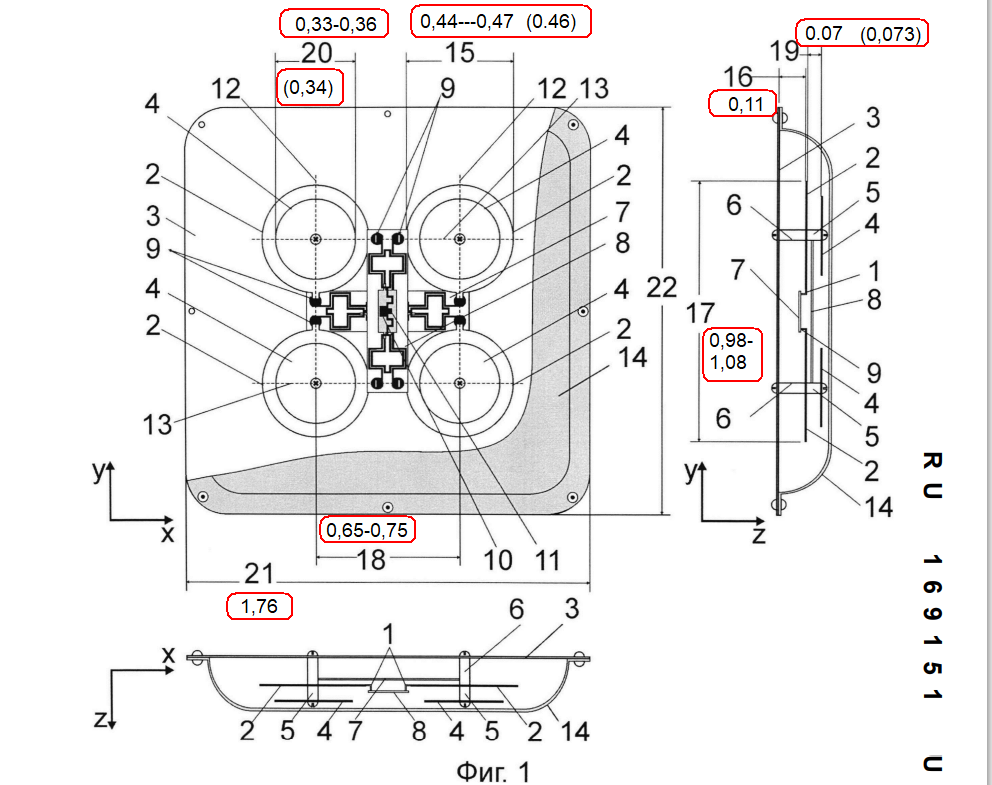
,,,framed in red are dimensions in medium wavelengths...
 2 people like this
 -
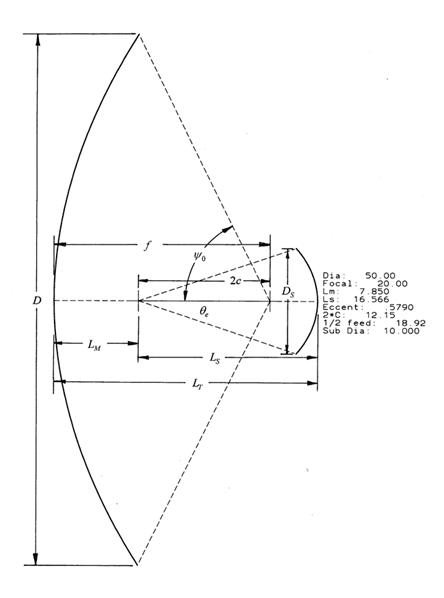
Gregorian Antenna – symmetrical reflector...
 3 people like this
 -
Coaxial cables with an impedance of 50 ohms (Ω) are used to connect the transceiver to the antenna. The most common cables are RG 58 and RG 213:The RG 58 cable is used for use, which has a diameter of 5 mm and the losses it introduces are insignificant, due to the small length of the cable. One detail that you MUST keep in mind is that a cable must be equal in length to multiples of ½λ to properly transfer the impedance of the antenna. If the length is different then the cable will work as an impedance transformer. In this case, a properly tuned antenna will have a high SWR at the transceiver output. The shortening factor (k) has a special importance in the calculation of the cable length. It differs depending on the dielectric of the cable.
-shortening factor(k) -Solid Polyethylene (PE): 66 %
1 person likes this -
,,, it depends on what kind (type) of cable it is ... in any case it is not a 75 ohm impedance cable ... !!!
1 person likes this -
,,, Shabra,how to get a commercial Kathrein vibrator...???
-
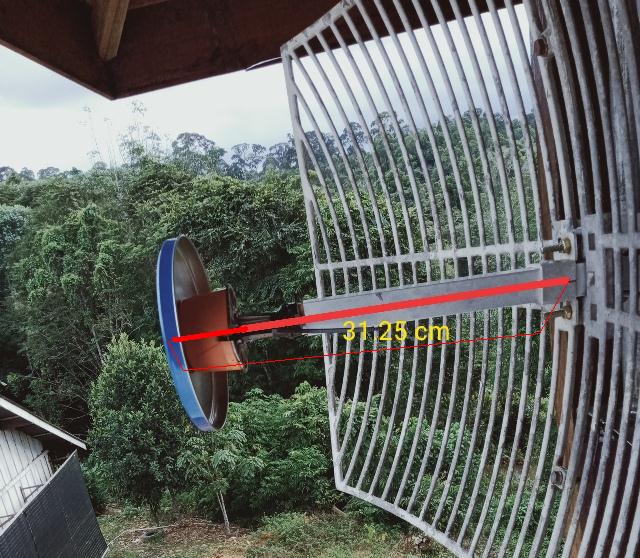
Do you understand what I mean?
-
,,,Shabra,try to put the plate in the focus of the parabole grid...!!!
1 person likes this -
,, the secondary reflector from the grid antenna is for either vertical or horizontally polarization ... you need a secondary reflector with circular polarization...!!!
-
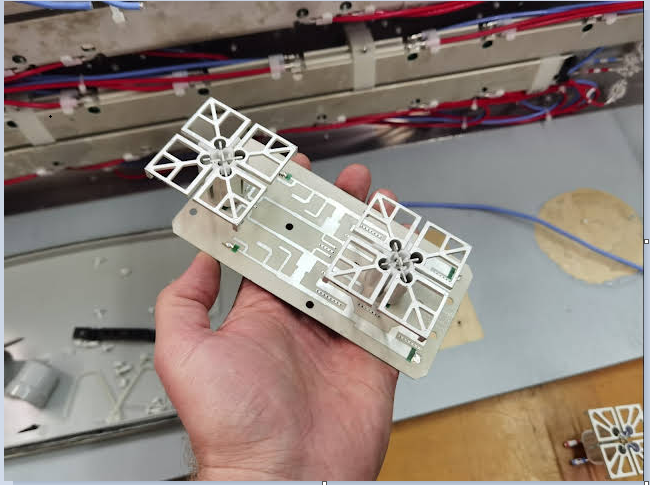
,,, another configuration ...
 2 people like this

in Antennas for 2.4 GHz band
Posted
,,, the simplest UWB antenna, Sputnik antenna...